
Ouachita County 72-Hour Arrest Log
The sheriff's time-frame page carries the county's multi-day booking view under the title Jail Intake/Release (last 72 hours). No weekly blotter exists. No monthly one either. So a 72-hour intake/release view is the honest name for it, not a historical arrest archive.
The sheriff and Camden Police Department both submit entries when a person is lodged in the county system. That span beats the 24 Hour Arrests screen. Its purpose is still narrow. An entry describes recent processing rather than present custody. Confirm current incarceration through the live roster or the detention center before acting on anything here.
Read the Ouachita Arrest Blotter
Start with the newest intake values, but never assume the page sorts by arrest time. Intake is the jail's own processing date. The city field doesn't mark the arrest location. The department field tells you which agency likely holds the incident report.
- Open the official sheriff time-frame page.
- Select “Jail Intake/Release (last 72 hours).”
- Confirm the 72-hour indicator on the portal.
- Compare name, age, agency, and intake details.
- Read each charge and bond row without treating it as a judgment.
- Verify custody or a questionable date with detention staff.
The direct 72-hour portal view is the blotter itself. Every other copy is secondhand. Skip old screenshots and cached search results. Whatever the live page shows at the moment you open it is what counts.
Ouachita Arrest-Log Entry Fields
Entries follow the same record format the jail roster uses. That format is thin. You get booking fields, nothing more. No certified complaint, probable-cause affidavit, sentencing order, or complete case file appears in it.
| Field | Reading it correctly |
|---|---|
| Name, age, race/sex | Portal identity metadata; compare carefully. |
| Intake date/time | Jail processing, not necessarily arrest time. |
| City | An undefined portal field, not a proven scene. |
| Department/officer | Submitting agency and officer where entered. |
| Charges | Charges or holds recorded at booking. |
| Bond | Charge-level text, not full release guidance. |
| Release date | A field that may require direct verification. |
| Photo | An inline record image when attached. |
Not every article carries a photo. The county has promised no image for each person booked. Nor has it set a fixed display period for the ones posted. A booking photo can come and go without notice. The portal refreshes on its own schedule.
Ouachita Multi-Day Portal Capture
The official 72-hour intake/release screen shows the county’s wider rolling window.
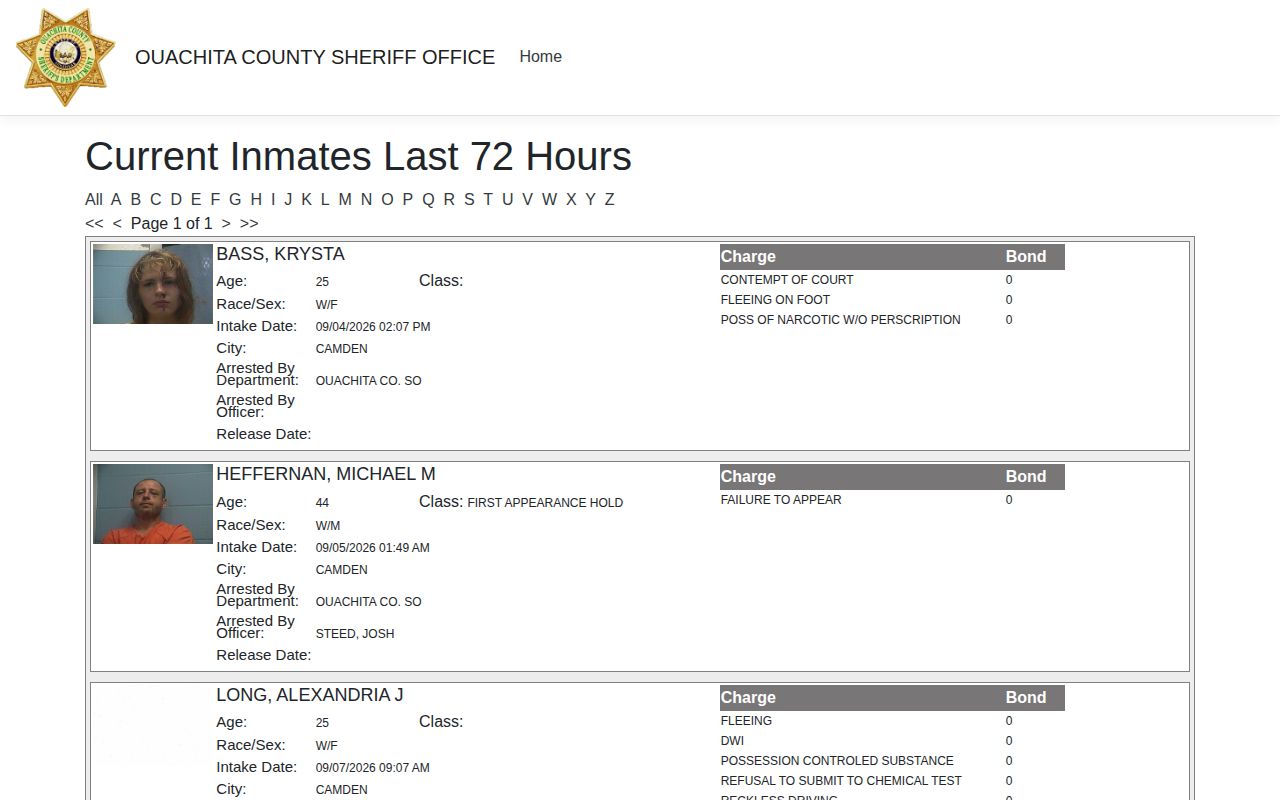
The Ouachita County portal shows its booking articles one page at a time. A typical page holds a handful of entries. Both the sheriff and Camden Police Department appear among the submitting agencies. Intake dates usually cluster within the past two days. Treat all of it as a sample of the window's shape. Yesterday's exact count means nothing today.
Weekend Ouachita Arrest Coverage
Seventy-two hours can cover most of a weekend. That reach catches arrests an early same-day search missed. The sheriff posts no guaranteed weekend, holiday, or refresh schedule, and no evidence supports a Monday dump or fixed posting hour. Entries appear after processing and drop off once the rolling boundary passes them.
A result here but not on the 24-hour page can still be valid. The two screens answer different time questions. Simple as that. Neither one counts every law-enforcement contact or every event someone calls an arrest.
Ouachita Arrest Dates Can Conflict
One entry showed a release date earlier than its intake date. That's a data glitch. Don't build a custody timeline from it. The portal also omits booking numbers and timestamps. Dates matter for real decisions. When a date affects a practical choice, call the Ouachita County Detention Center at 870-231-5300, extension 2.
Different custodians answer different questions: the jail confirms its booking record, while the arresting department controls incident material. Search ARCourts can carry a filed case into hearings, judgments, and disposition, subject to court access rules, so none of these sources should be replaced by an unofficial repost.
Ouachita Arrest Log Archives
The public 72-hour page keeps no back archive. Once an entry rolls away, it is gone. Try the current roster and the first-name, last-name, and released search before giving up. Older or incomplete records call for a different tool. File a focused Arkansas Freedom of Information Act request with the custodian, listing the person's name, the approximate booking date, and the specific jail-log entry, booking card, or photograph you need.
Retention is not publication. The county may still hold a booking record long after the rolling portal drops it. Court disposition lives in a separate system entirely. A released person can vanish from the current roster while a court case lives on.
One more trap: a single article can hold several charge rows. Count people, not rows. The log is a set of booking articles, never a county crime total.
Local News Is Selective
Local news adds story and context. It is not the county log. The Camden News breaking section carries selected arrest and public-safety stories, alongside outlets like Yes Radio Works and South Arkansas Now. Each picks reports from agency statements or incident material, so none of them serves as a complete booking archive.
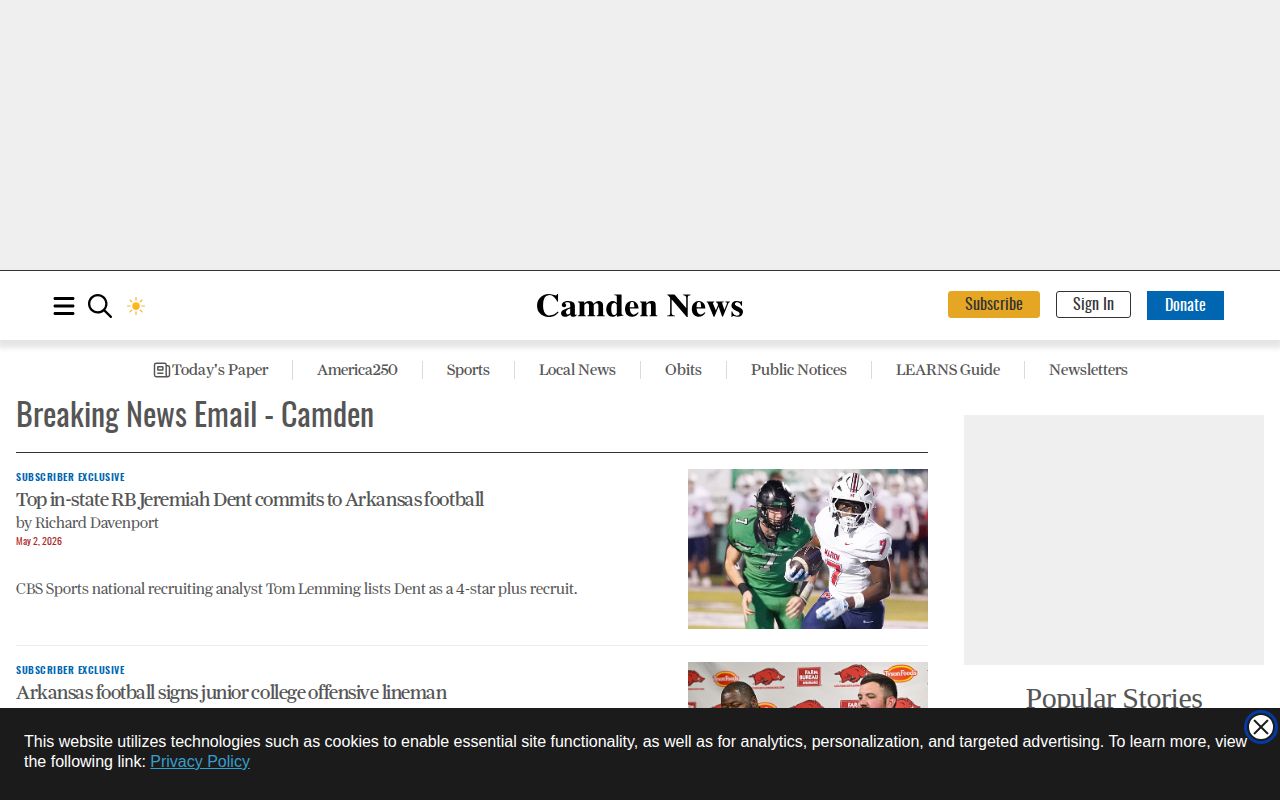
News coverage skips plenty of bookings. So do copycat sites. Unofficial booking sites clone county entries that may be stale, incomplete, or detached from later corrections. Official sheriff and court sources come first, always, with third-party photographs treated as leads rather than answers.
Ouachita Log Search Routes
The sheriff’s official search menu sorts arrests by time. You can check the current roster. It also covers the last 24 or 72 hours. A name search is there too.
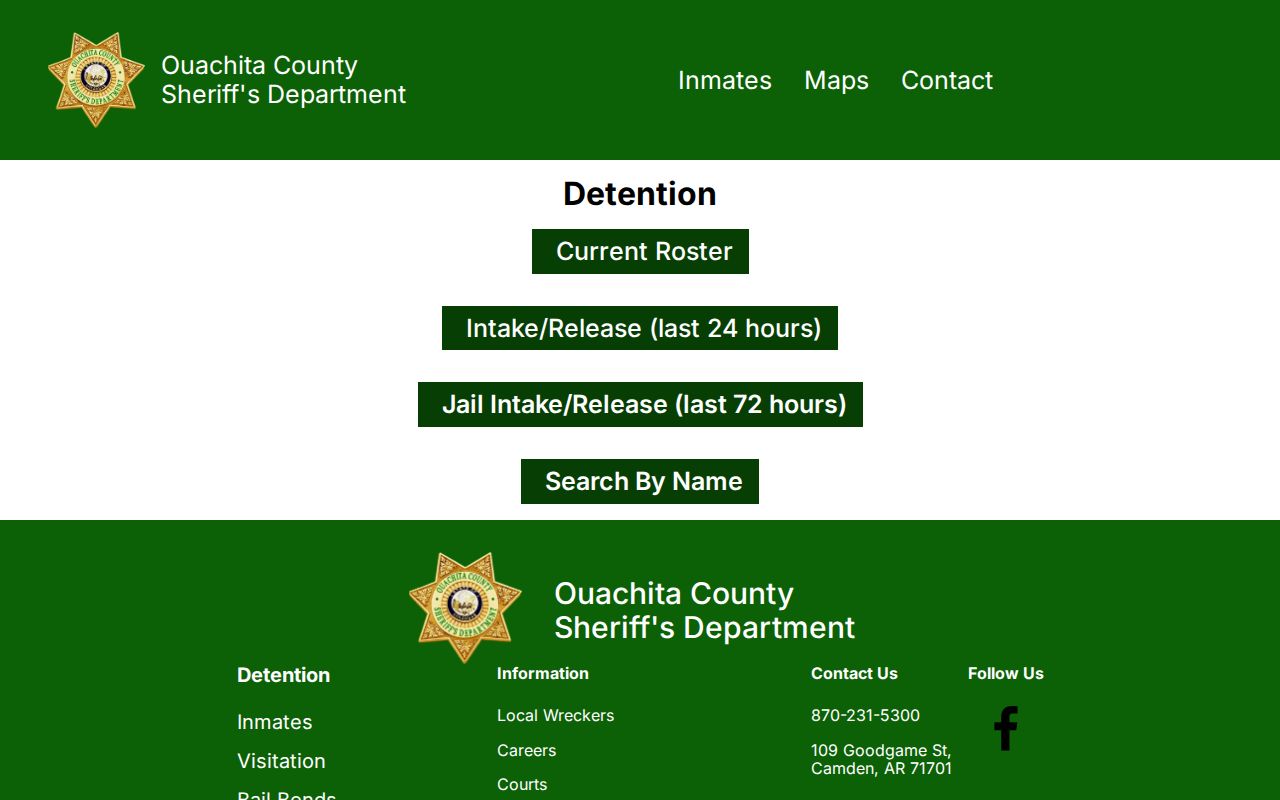
The 72-hour view is easy to overread. It is not the same-day view, and it is not a current custody list. Someone arrested in Ouachita County can still sit in the jail after rolling off that window. They may also show up there while the roster says otherwise. Know which window you opened before drawing conclusions. For older bookings, the name search has a released checkbox worth trying. The form takes a first and last name, but nothing more. It offers no charge filter and no date range. There is no booking-number field either. Plan the search around a name.
Ouachita Records After Release
Leaving the roster is not the end of a record. A person can drop off the Ouachita County jail list. The booking entry and the court case both live on. Start with the released-name option in the jail’s public record. Then move to the court system for filed charges. A disposition is simply the court’s recorded outcome. It may read as dismissal, conviction, acquittal, or something else entirely. The jail screen cannot predict which. Remember that the 72-hour window is a rolling one. Entries slide off as new arrests come in. Skip copying or sharing a booking photo as a stand-in for the real record. The originating office can correct errors and give current status better than any saved page.
Ouachita Record Custodians
Where a record lives depends on who made it. The sheriff or detention custodian holds the booking card and its attached photograph. Camden Police Department, or whichever agency made the arrest, keeps the incident report. The district and circuit court offices control their own dockets. Send a request to the wrong office. The request can stall, even when the material is fully public. Routing matters. Treat the department field as a clue, not as a map of every agency involved. A hold placed by another jurisdiction can show up in county data. A city label may describe where the record came from rather than where the arrest happened. A bond figure, release value, or agency name can conflict with another official source. Ask the custodian to sort it out.
Interpreting Ouachita Bond Entries
Bond shows up at the charge level on the Ouachita County log. That is where the certainty ends. The sheriff publishes no county bond schedule alongside the roster. So a number, a blank, a zero, or a “no bond” note cannot explain every hold. Release still turns on court action, another agency’s detainer, and plain processing steps. Read the bond text as part of the booking record. It is not a release promise. If a figure looks off, call the detention center. Then check the court file. The sheriff’s bail page posts a link to a state bondsman list. That adds no fixed county timetable either. A release field deserves the same double-check whenever it clashes with the roster. The log, in short, is a compact set of jail fields over a rolling window. Context and outcome come from the arresting agency’s report and the court docket.
Public Record Search
Sponsored Results